The starting point
A van wrap is an ad that drives around town every day. But it is hard to picture how a logo, a phone number and a gold stripe will look on a real vehicle before the vinyl is printed, and a mistake in the print file is expensive to fix.
The owner needed to see the wraps on his exact vehicles, from every side, and the wrap shop needed files it could print without guessing.
What I built
- The right vehicles. Identified the exact model and body of each vehicle and wrote spec sheets, a checklist and a questionnaire for the wrap shop.
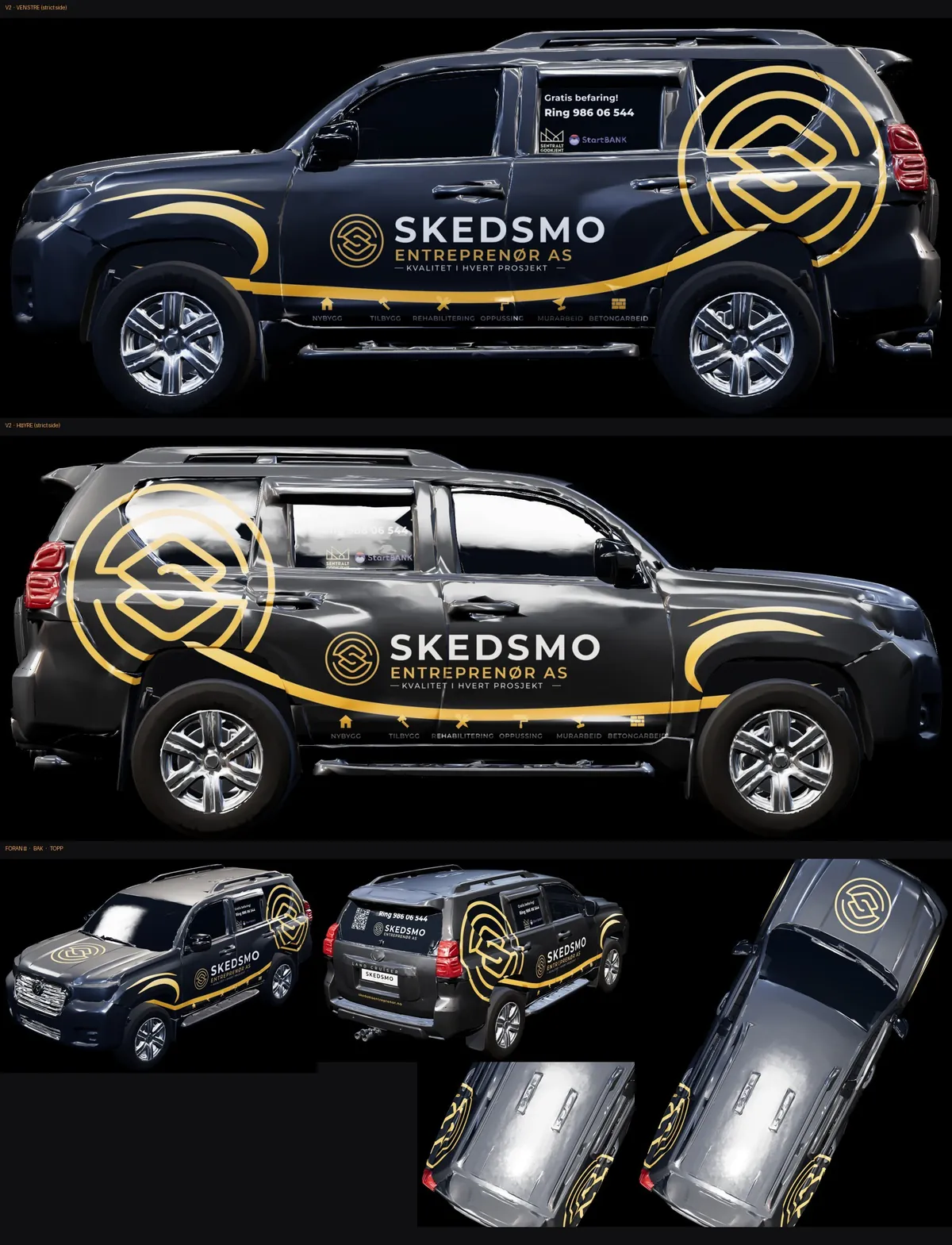
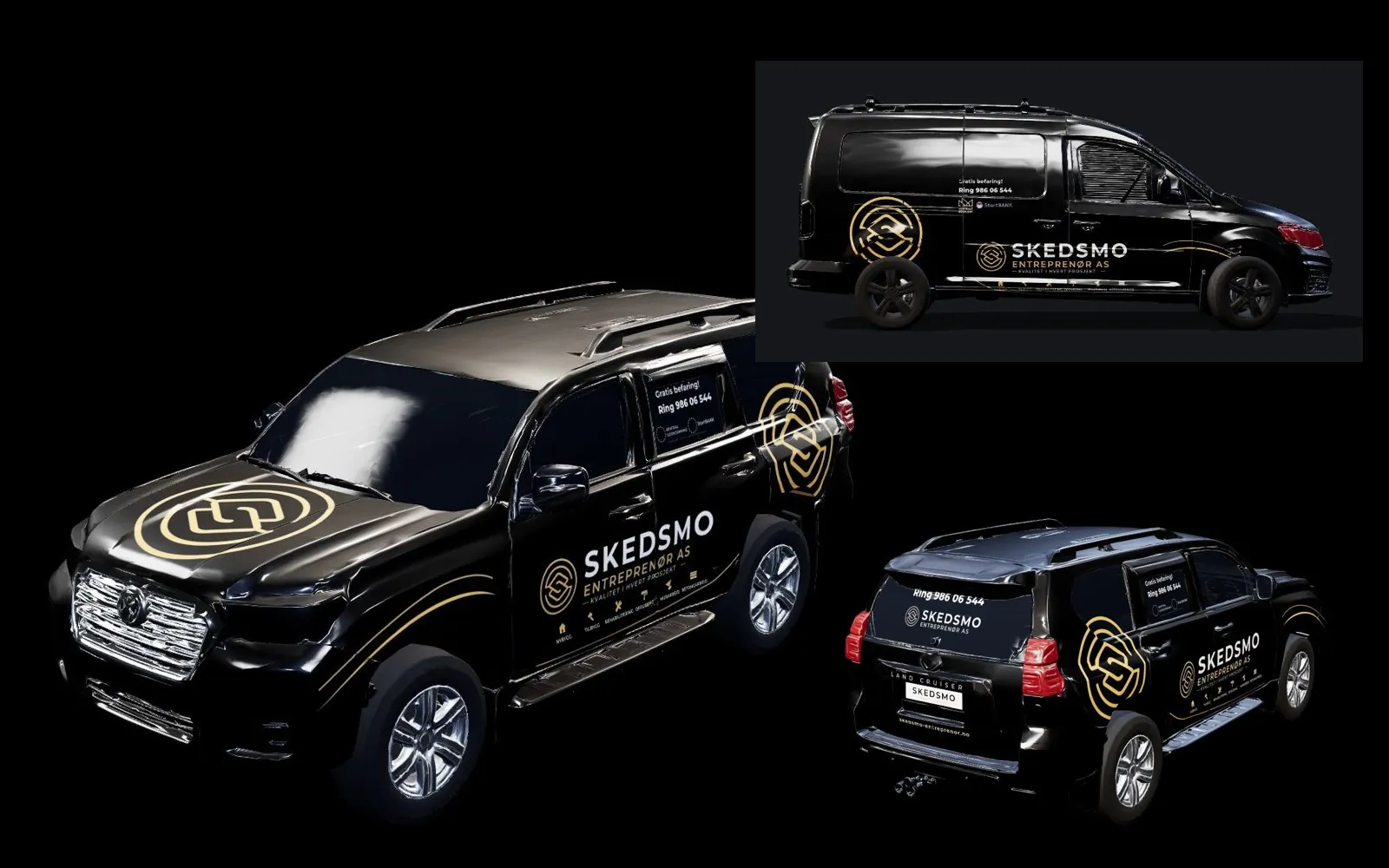
- Three design options. A, B and C in the company colors, black and gold. The owner chose option C.
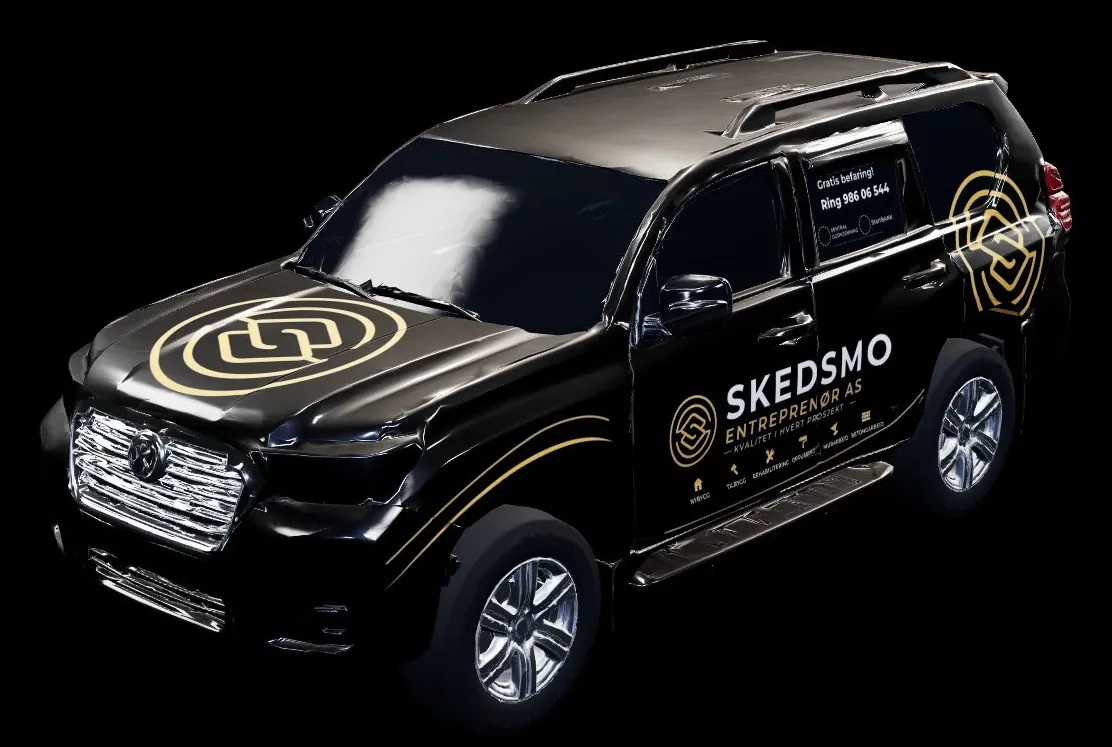
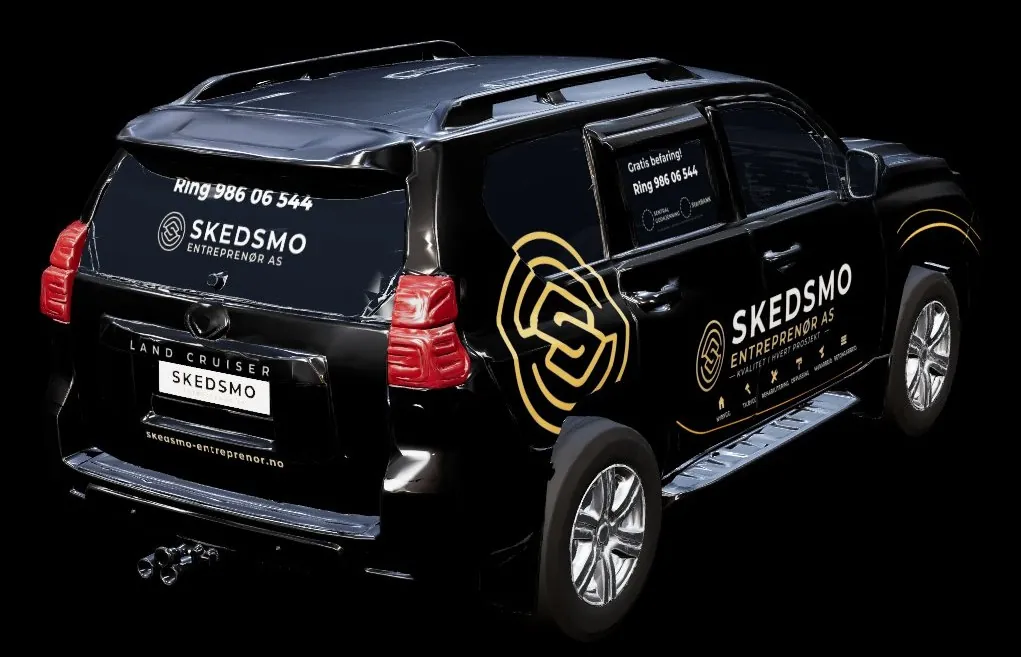
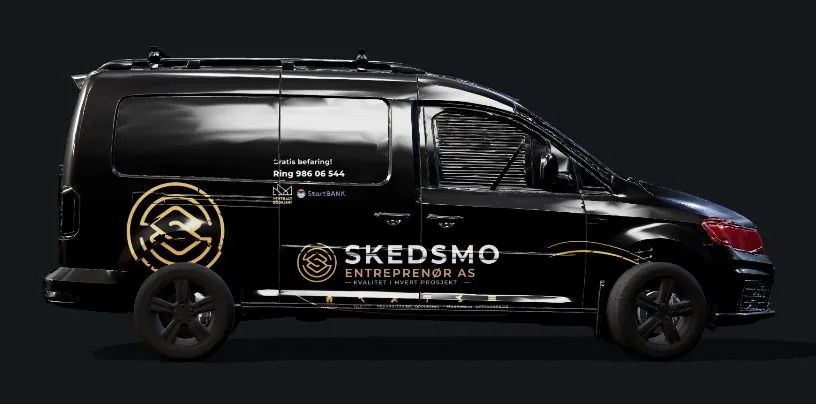
- A 3D car wrap visualizer. A 360 degree viewer built with Three.js: graphics, glass, QR code and badges, tuned against the owner's reference images.
- A placement editor. Drag and drop the logo and text on the vehicle and see the result right away.
- Print files without Illustrator. From SVG to print ready PDF with preflight checks, 1:1 test fit sheets, die cut decals and a gold color proof.
- Handoff. One page for the wrap shop with measurements, files and placement for every vehicle.
The result
The owner chose the design by spinning the vehicle on his phone instead of guessing from a flat sketch. The Caddy model became 90% smaller, from 46 MB to 4.7 MB, and the Land Cruiser design now builds in 5 seconds instead of 40, so every change could be shown at once. The wrap shop got finished files and one page with everything it needed.
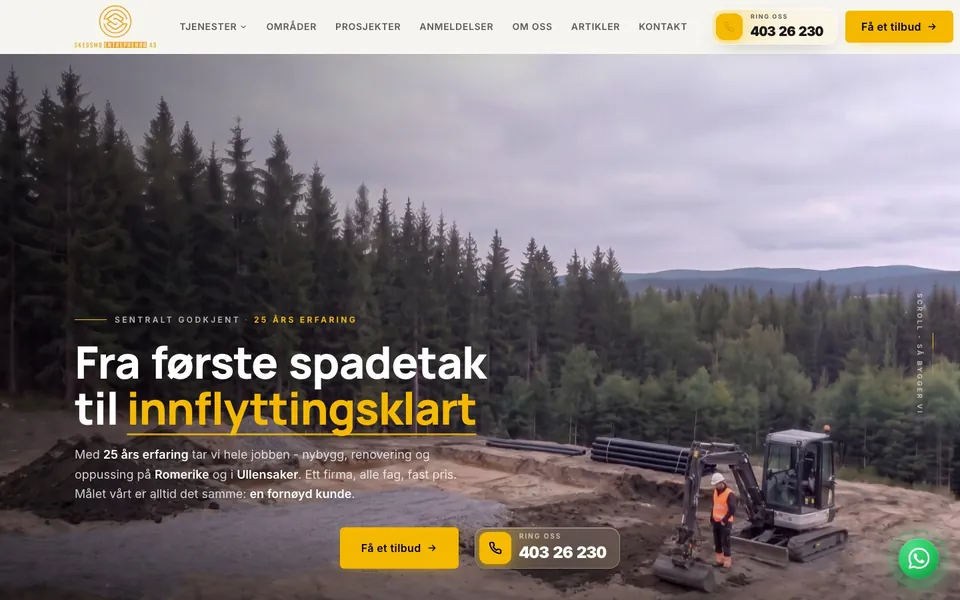
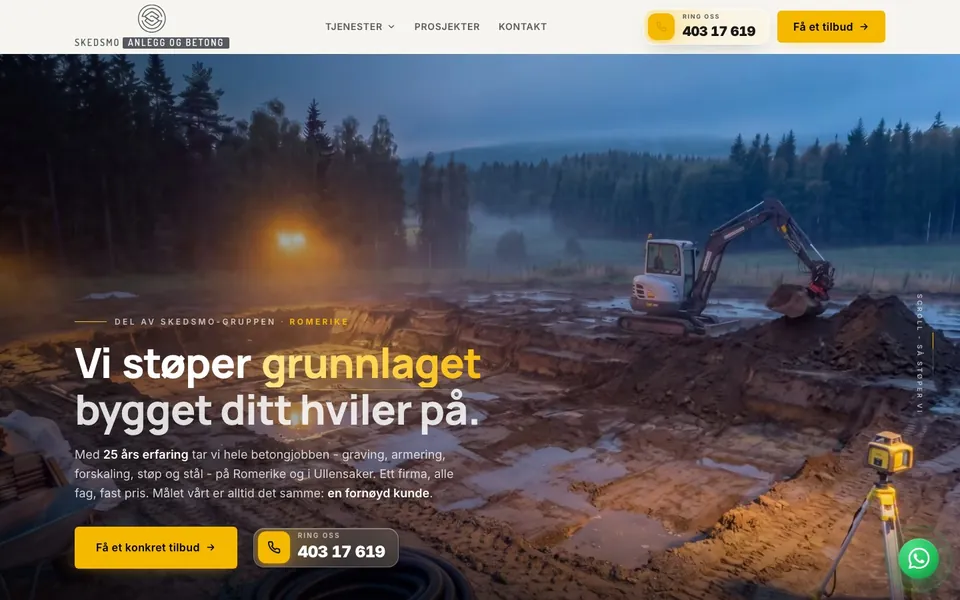
The same identity runs on the Skedsmo website, so vehicles, website and signs look like one company.
Tools and tech stack
- Three.js
- GLB 3D modeller
- gltfpack
- Vercel
- SVG
- PDF for trykk
- Python
- Inkscape